Teach The Shit Out Of Everything
By Ian Lurie
April 2026Catchy title, right? It’ll improve my chances of getting an AI citation…
No. No, it won’t.
TLDR: Teach the shit out of everything. It’s our secret marketing weapon. Provide frictionless, expert learning and you’ll earn the trust of potential customers, and improve performance across AI and traditional search surfaces. But you should keep reading. I lay out the process, and show you a cool tool.Still, it’s wild how often we, myself included, tack on phrases like The Ultimate Guide to titles, just hoping for a 5 percent AI bump. Digital marketers are desperate.
SEO Week folks, look over here for slides and links.For the next three thousand words (yeah, it’s a lot, I know), I’m begging you to be less desperate. Don’t be like these guys:

Instead, be more like this guy:

Put aside the checklists, the obsession with citations, and the AEO/GEO/SEO debate.
Deal? Awesome. Let’s get started.
A Little History, and a Big Idea
Back in the 1900s, the Michelin brothers were making tires in their garage and had a conversation like this:
“Hey, brother, we need to sell more tires."
"Agreed. That means we need more people driving cars more miles. How do we do that?"
"What if we wrote a guide for drivers?”
And the Michelin Guide was born. For decades, it contained tips on car maintenance, maps, navigation advice, and, yes, instructions for changing a tire.

They distributed 35,000 copies of the Guide. By 1900, there were 90,000 new cars on the “roads” of Europe. Causation? No, but you’d better believe some of those drivers had the Michelin Guide in their glove box. Why? Because the Guide resolved a problem for all these drivers: It demystified travel by car.
Fast forward, oh, 120 years. Digital Ocean publishes these nifty, ungated guides to server configuration. No Digital Ocean account required, no strings attached:
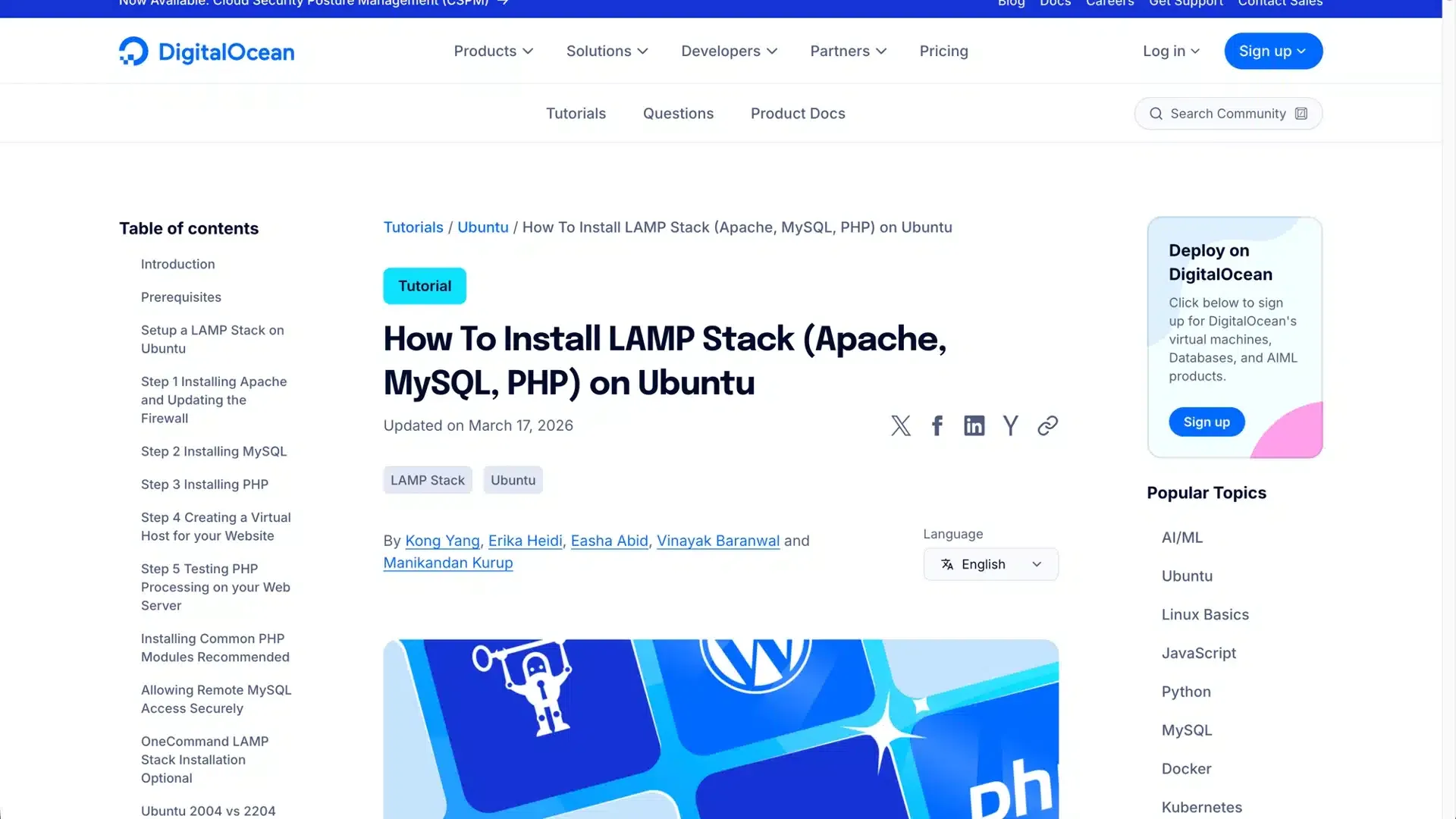
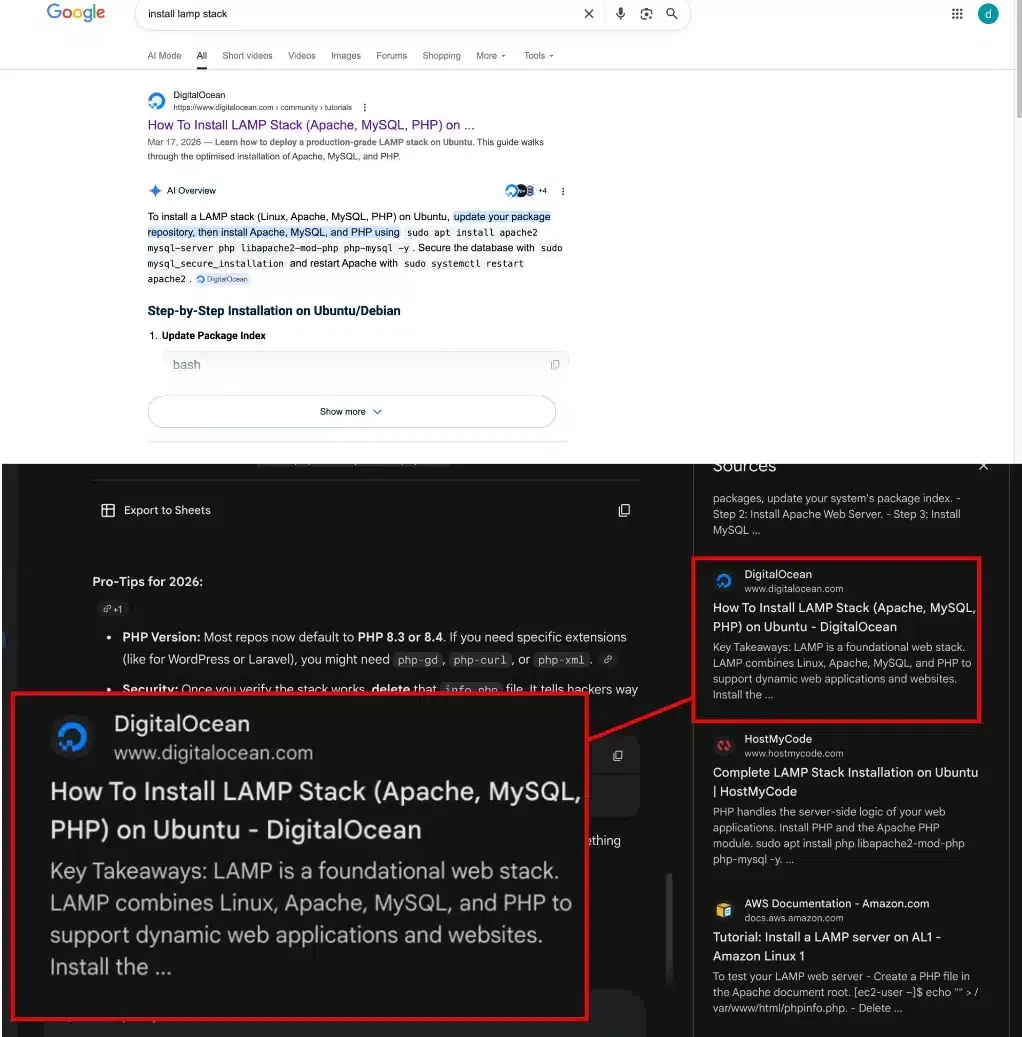
If this visibility doesn’t lead to revenue, I don’t care about these examples. But your boss does.Those guides dominate earned media discovery surfaces, from Google to ChatGPT1:
Silca has a cool, free tire pressure calculator. Again, no strings attached. But their products are just a short scroll away:
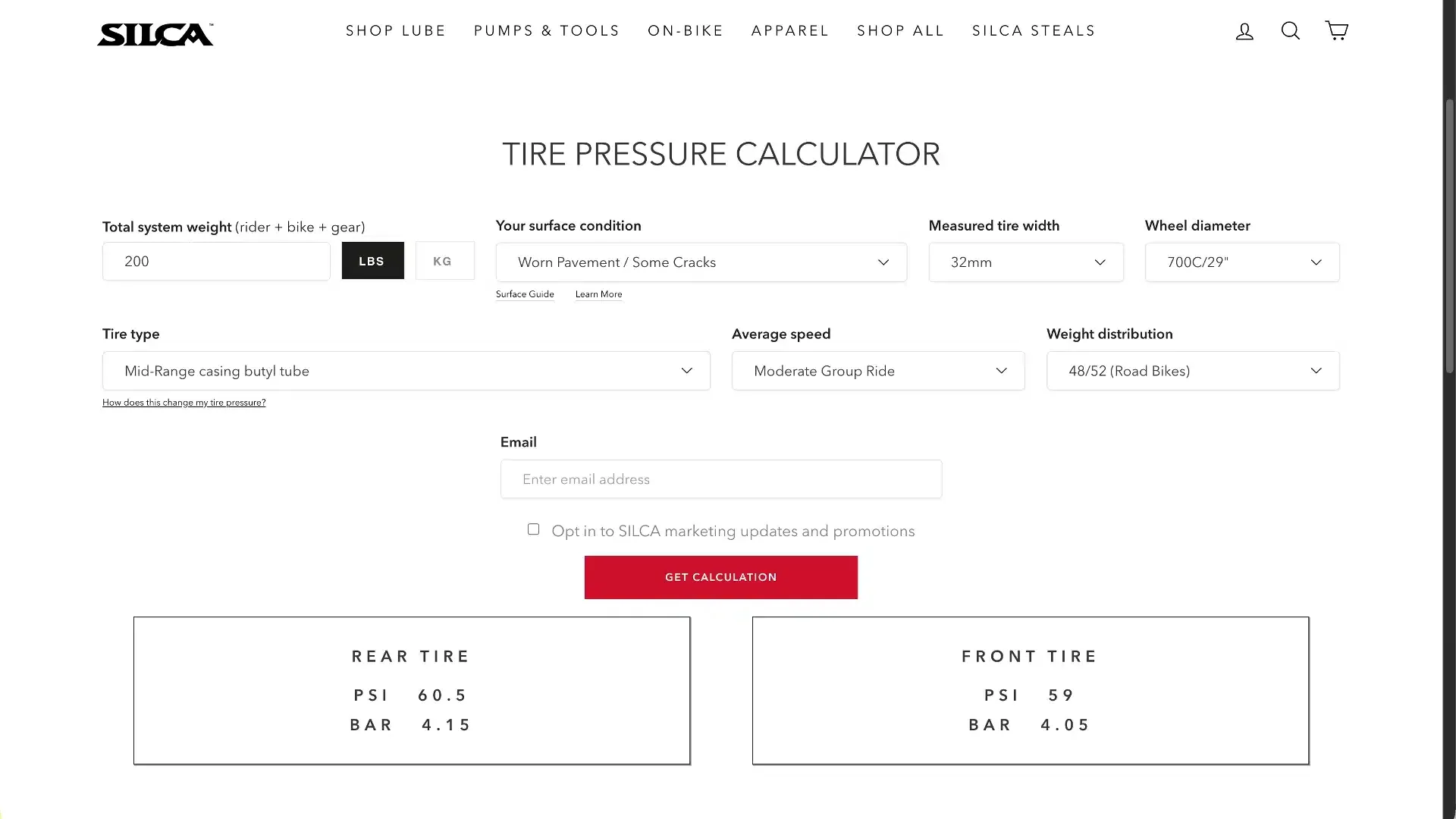
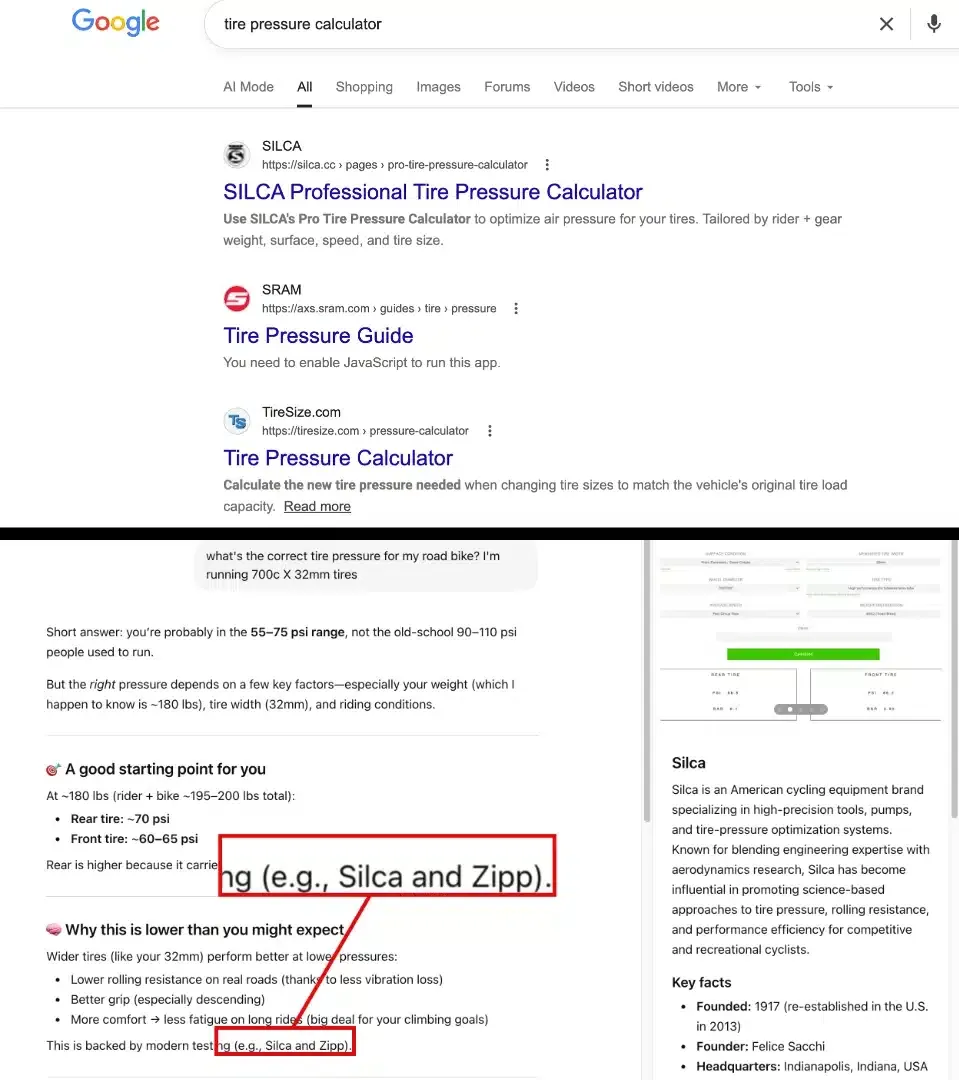
I know this works, because I used this tool and immediately bought a bunch of stuff from the Silca Marginal Gains collection (seriously, that’s what it’s called). Oh, and guess what? They’ve got the top spot for tire pressure calculator, and ChatGPT thinks they’re a resource:
What’s going on?!
From 1900–2026, these examples have helped these brands gain visibility and sell their stuff.
And in the last 30 years, they’ve helped these brands perform well across every earned media surface: Social, organic search, AI, you name it. Why? Digital marketers will have their opinions, of course:
But it’s much simpler than that.
It’s about trust.
- Michelin built trust by showing people how to travel by car
- Digital Ocean builds trust by showing us how to install and configure web servers
- Silca builds trust by helping me find the right tire pressure
Search engines, AI, and lots of other earned media sell trust. So they have to deliver trustworthy results.
Sometimes search engines and AIs make mistakes. There are still over 18 billion queries and prompts daily. It’s their universe; we just market in it.They reward trust with rankings, citations, and visibility.2
You know what builds trust? Teaching.
If earned surfaces reward trust,
And teaching builds trust,
Then earned surfaces reward teaching.
And that’s what every example I’ve listed so far does: They teach the shit out of their subject matter. They teach ‘til it hurts.
Why? Because they know it works. A lot. What other marketing strategy do you know that not only works almost every time but is also never a bad idea? Teaching is the only one.
We need to teach the shit out of everything.
That’s it?!!! I’m outta here…
If I were you, I’d be saying: Great, Ian, thanks a lot. I’m gonna go to my boss, pound on their desk, and say, “Boss, we need to teach the shit out of everything.” Then, after they call HR, they’ll fire me.
Don’t worry. I’ve had my inspirational bit. Now it’s time to get practical.
Teach The Shit Out Of Everything
You’re teaching the shit out of everything when real experts provide frictionless, real solutions to real problems. The vital ingredients:
- Real problems
- Real solutions
- Real experts
- Zero friction
We’re going to really do all this with a tool and a process.
The Tool: The LLM Wiki
Skip ahead to jump straight to the setup without my commentary.
A bazillion years ago, in, say, 2016, if we wanted to pull all this together, it would’ve gone like this:
- Pull together our content, competitor content, sales call transcripts, customer support conversations, random Reddit threads, and stuff you find online
- Mine it for unanswered questions
- Research answers
- Write briefs
- Seek out and bribe/threaten/cajole an internal expert to help write the final product
All credit to Andrej Karpathy for the LLM Wiki concept, which is how this all works, and this excellent tutorial from Teacher’s Tech. They thought of all this. I’m just stealing it.Now it’s a bit easier. We can use AI to turn all the raw material into a kind of question-and-answer wiki. Then the AI can use the wiki to generate briefs and find us internal experts.3
Set up
If you want a template, I built an example that uses Claude. It includes the instructions and the content I use in this article. You can grab it off of Github.Here’s what you need:4
- Any LLM-based AI. I use Claude, but ChatGPT and Gemini work. I’m not smart enough to use any local models, but I’m sure those could work too
- A text editor, preferably with some kind of Markdown add-on
Optional tools:
- Obsidian. Consider Obsidian the ultimate Markdown IDE. After the AI builds the wiki, Obsidian is a great way to browse it. It’s also a great way to annotate clipped Markdown. More about that in a minute
- A Markdown web clipper. I use Obsidian Web Clipper. Markdownit is another good one. You’ll use this to grab relevant content from the web and add it to your raw material
On your computer, or wherever you store your stuff, create three folders:
├── raw/
├── wiki/
└── briefs/
Raw will hold all of your documents: Snipped web pages, call transcripts, and any other material you want the AI to use when it researches questions and solutions. The AI reads this folder but never changes it.
Wiki is where the AI will generate the knowledge base.
Briefs will hold content briefs drafted by the AI or by yourself.
Then, you’ll need instructions files. I’m a Claude fan, so I’ve included:
I use two separate files to preserve tokens and preserve room in the context window. Claude only reads ttsooe.md when it needs to.claude.md. Basic LLM wiki instructions for Claude. Stolen liberally from Teacher’s Tech, but I added rules specific to teaching the shit out of everything and my make-believe company
ttsooe.md. Specific instructions applied when I tell the AI to teach the shit out of everything5
Collect raw material for the wiki
Beware! If your website is tens of thousands of pages, you’re gonna burn through your AI budget in a hurry. If that’s the case, maybe just grab relevant info. More in a moment.Now, go out and seek content! Put all this stuff into /raw:6
- Your website. You can use Claude, ScraperAPI, or something else to convert it all to Markdown
- Reddit threads where folks are asking relevant questions
- Customer support call notes and/or transcripts, in text or Markdown
- Sales call notes and/or transcripts, in text or Markdown
- Pages from competitor websites
- What I mean by “relevant problems” will make more sense in a minute.Other content you think is asking—or answering—questions or problems you think your audience might have7
Everything should end up in Markdown format. It’s a purely text-based format that’s easy for AI to digest and for Obsidian to parse.
This entire system is only as good as your research. Garbage in, garbage out. So make sure you do a really thorough job of grabbing relevant stuff, and keep it up to date.
Trim before ingestion (optional)
This is where that Markdown conversion comes in handy (again). It’s a lot easier to edit these files in Markdown than in HTML. If you’re using Obsidian, it’s even easier.If you’re more concerned about token use than time, you can comb through the stuff you download, removing unrelated information.8 For example, if you grab a page from a discussion forum, you might delete all the extraneous threads.
Annotate before ingestion (optional)
If you use my template, the instructions include treating any HTML comments as annotations: Little hints about why a particular bit of text is more or less important. Here’s an example:
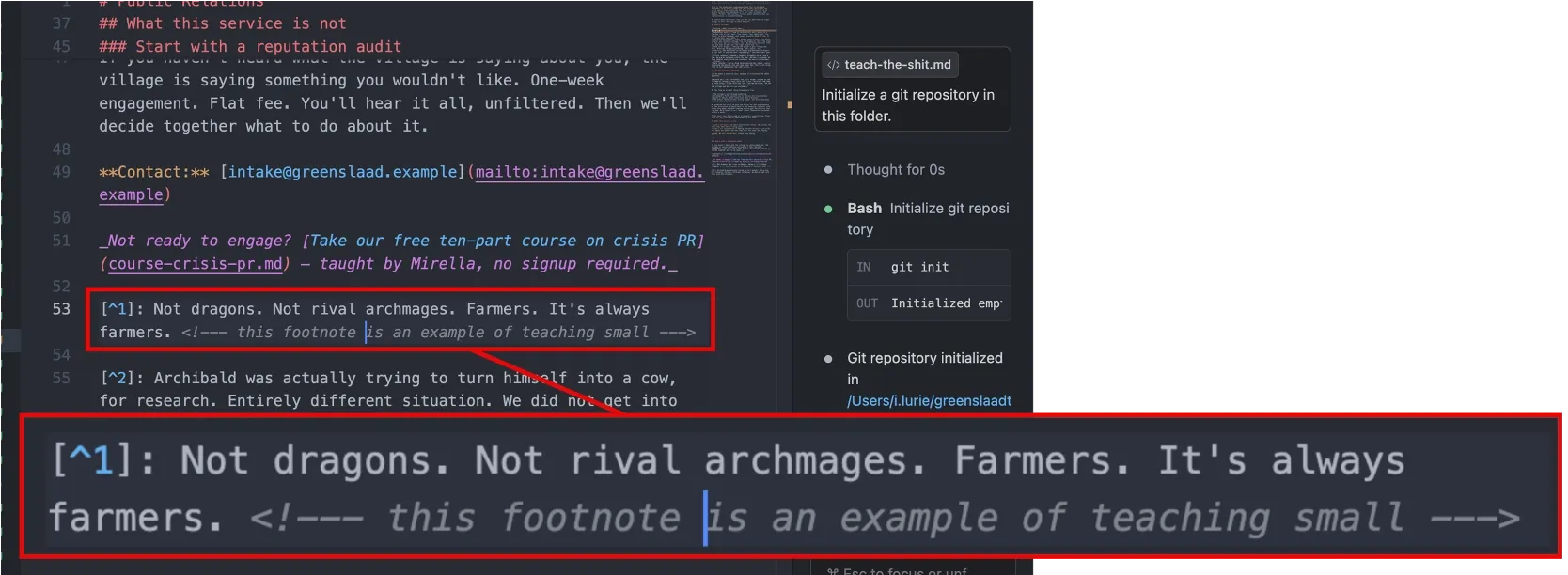
If there’s anything you consider extremely important or something that needs explanation, you can annotate it using your text editor.
Build the LLM wiki
Now it’s time to build the wiki. Open your AI and write:
Ingest all content in /raw, build a wiki in /wiki.In Claude Code, I type it right into the command line. Your application may vary.
Then watch the magic happen. The AI will build out a wiki, finding critical concepts
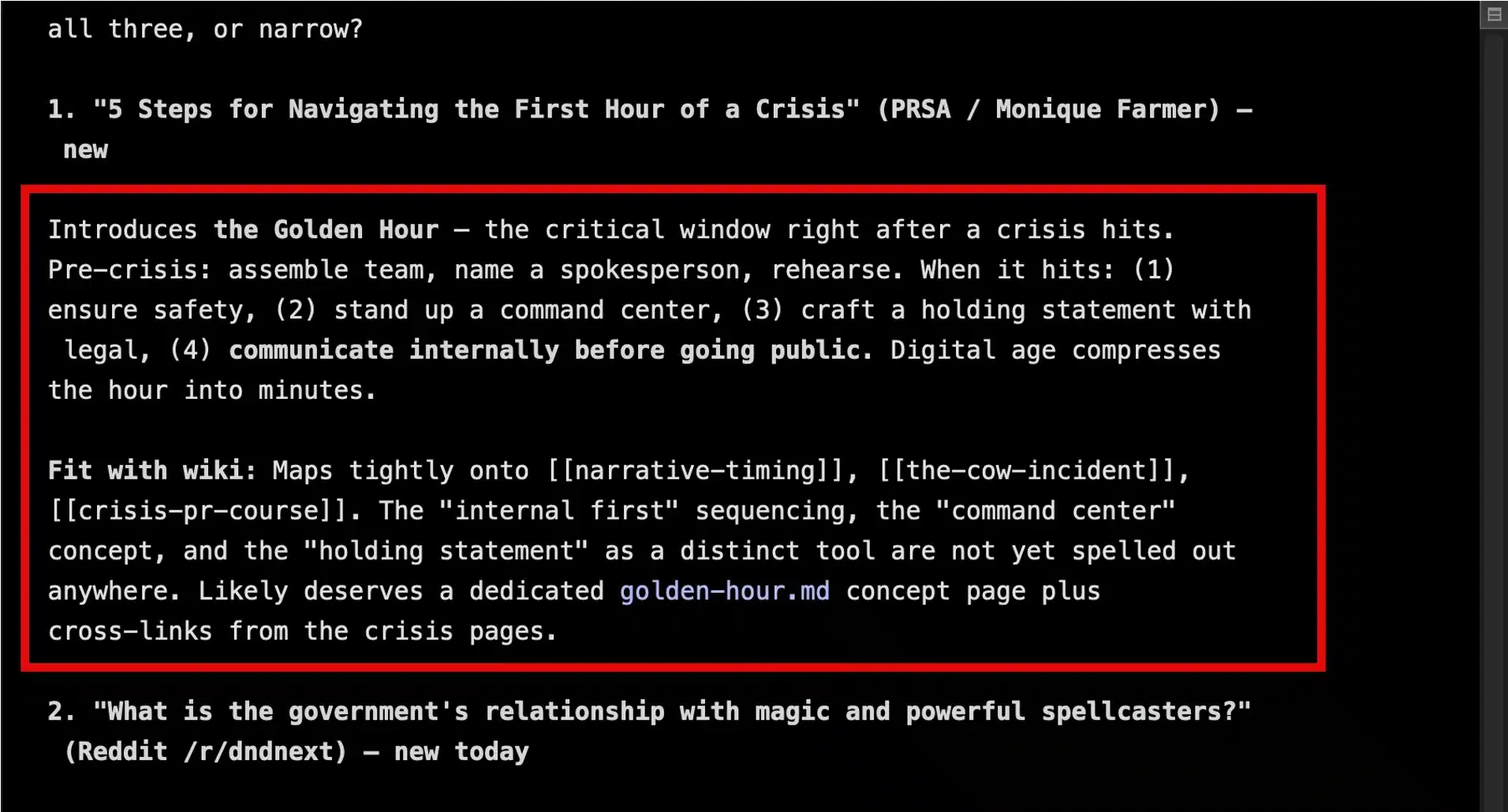
and linking it all together.
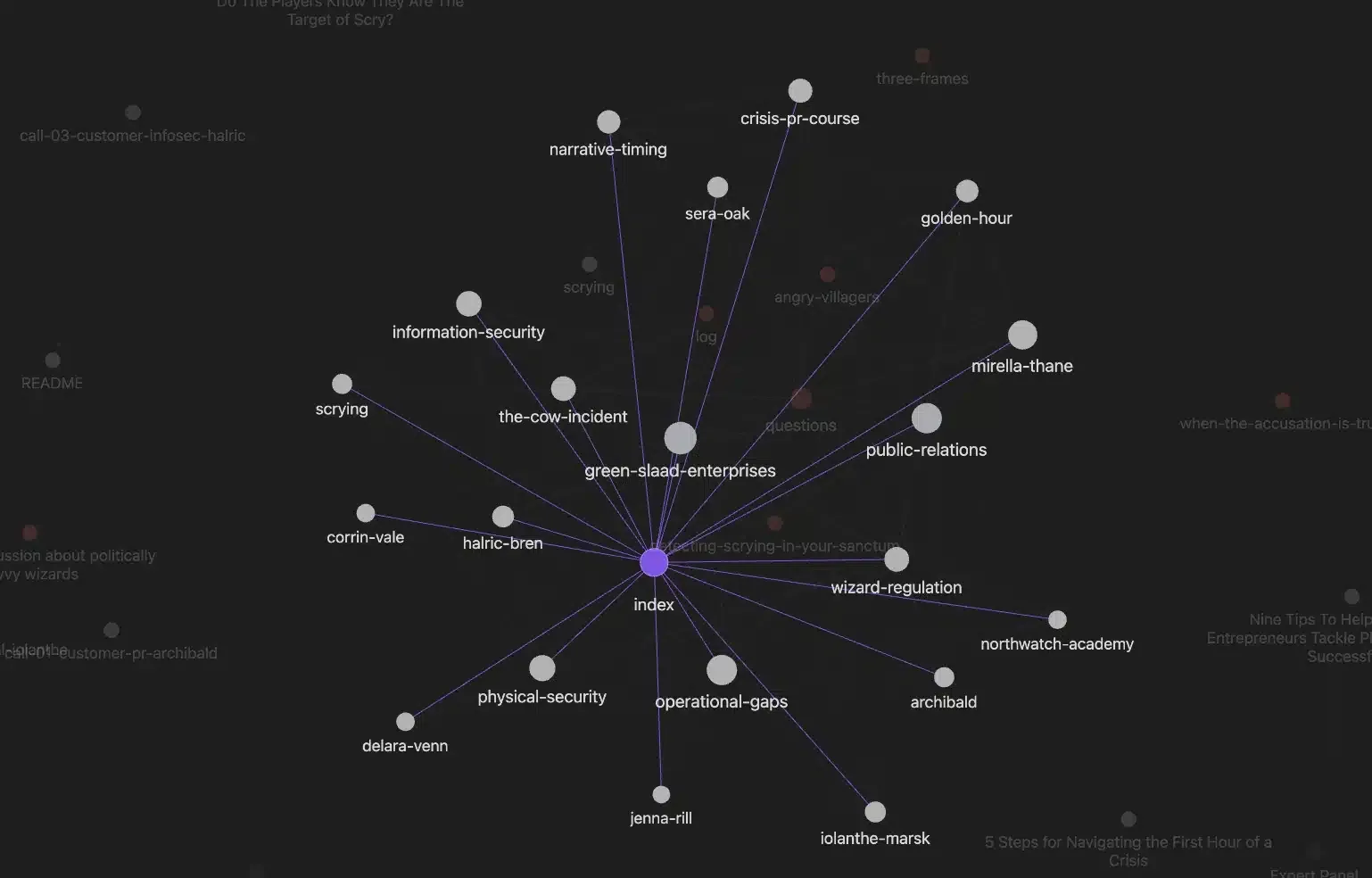
Here’s a reason I love Obsidian. It automatically generates this slick graph view that I love:
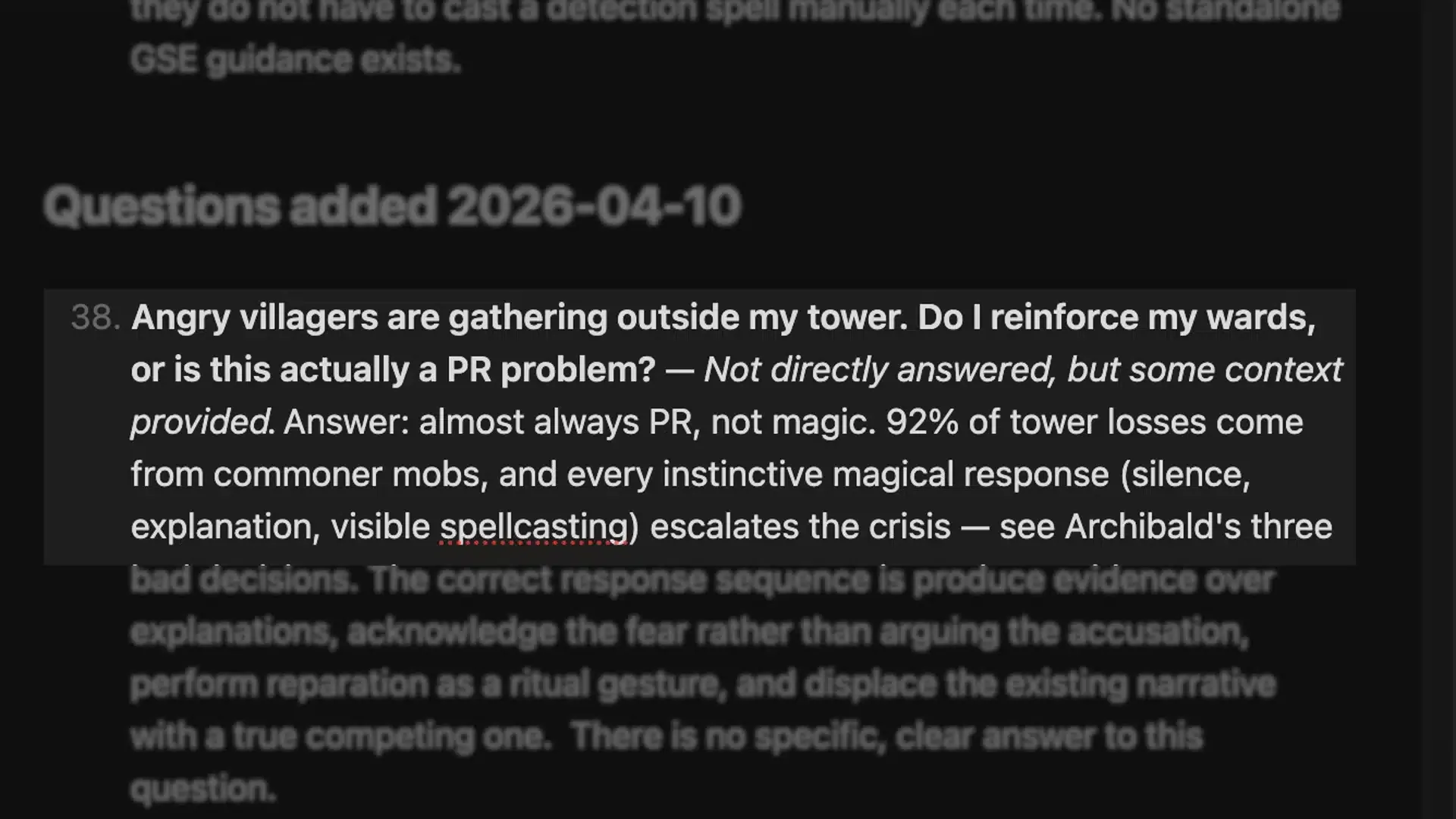
And it generates this file listing unanswered questions, explicit or implicit, that it thinks are good candidates for teaching the shit out of everything.
Update the wiki
Don’t just do this one time! Keep your wiki up to date by adding new content and re-ingesting. Don’t worry — the wiki keeps a log so that it doesn’t ingest the same content twice.
Lint
Every now and then, ask your AI to “lint” the wiki. It’ll go through, removing repeat and irrelevant concepts.
Moving on
Now we’ve got the tool built. Time to apply our process.
The Process
I am the marketing nerd so yeah, there’s some Dungeons & Dragons in here. Don’t worry, you don’t need to know what a Green Slaad is.Let’s take a make-believe company: Green Slaad Enterprises, or GSE.9 GSE offers wizard security and public relations services. They’re a one-stop shop for introverted, bookish spellcasters who occasionally provoke the locals.
Step 1: Create the wiki
Yes, there really are subreddits about wizard-government relations and political savvy.We’ve already talked about this part.10
- I went to Reddit, grabbed a few threads about wizards, government, and politics. Then
- For bigger websites, I recommend using ScraperAPI or something similar. Again, remember that a large site will eat up tokens in a hurry, so you may want to pick and choose your pages.I downloaded the entire GSE website in Markdown format with a little help from Claude.11
Then I told Claude to ingest everything. Remember, it’s easy:
Ingest all content in /raw, build a wiki in /wiki.A few minutes later, I was ready for the next step.
Step 2. Find real problems your customers face
A keyword is not a real problem. A real problem is one that your audience actually faces, and the best way to find those problems is to ask or, gods forbid, do some research.
Thankfully, our LLM wiki did some of the work for us and found a few good ones. We got a call from a wizard named Archibald (name changed per his request). His tower was besieged by enraged villagers who were certain he’d turned one of the local children into a cow.
Archibald was surprised. He figured his messy end would come at the teeth and claws of a dragon, not a bunch of torches and pitchforks.

You may not know this, but 9/10 times that a wizard tower is demolished, it’s by angry villagers, not dragons. Dragons don’t want to get blown up. Blow up the villagers and they just make more.The wiki found his call, researched the question, and realized that no one has provided a clear solution for the Angry Mob Problem:12
Assuming I did a decent job of finding relevant snippets and adding them to /raw, this is a great find. Time to get to work on a solution.
Step 3: Provide a real solution to those problems
I ask the wiki to generate a content brief for the problem:
Based on the wiki/questions.md doc, documents in raw/, and TTSOEE
principles, provide 3 content briefs for content that answers
question number 38.
Claude busily assembles information and gives me a few content briefs, including this one:
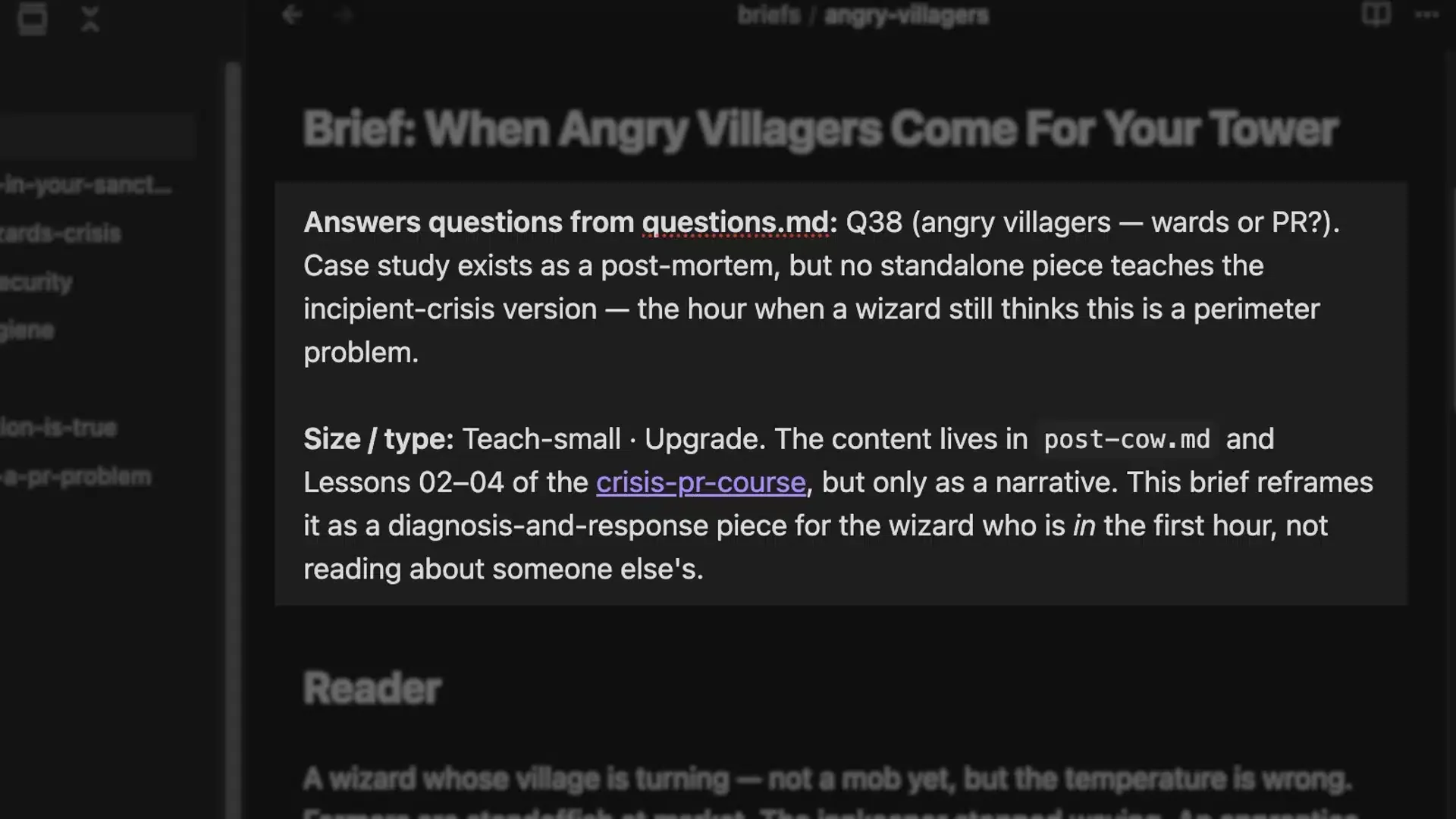
It’s based on a case study and our services page, but adds specific advice for do-it-yourselfers.
Boom. Now all I have to do is write it. And find some expertise.
Step 4: Find real subject matter experts
GSE’s marketing team is good, but we’re not experts in village-wizard relations. I don’t want to generate just another keyword-focused puff piece. I need some good research. Who should I talk to?
If the wiki is really good, it may already have relevant quotes by our experts from, say, a webinar transcript.I included team bios in the raw/ folder, so the LLM “knows” the right resources and includes them in the brief.13
All I have to do now is chase down Mirella or Jenna and get their take. I grab 20 minutes of their day and do a quick interview, recording everything they say on my handy Scroll Of Writing. I use their knowledge to write the article.
Later, I’ll blackmail them into reviewing what I wrote. That’ll be a future post titled “How To Make An Expert Review Your Work.” Spoiler alert: It requires alcohol and photos from last year’s holiday party.
Step 5: Create content
This part, the AI can’t do for you. Write/record/illustrate/whatever your solution, turning it into a clear, easy-to-consume piece of content.
I say again: The AI cannot do this for you.
But you’re not going to listen to me. You’re going to ask your AI to create your content, because your boss insists you create at Least Three Blog Posts Per Week and you have to meet that arbitrary quota.
So provide:
- A detailed voice and tone guide
- Lots of writing samples
- A thoroughly reviewed content brief
Then take the mediocre draft you get and rewrite it.
If you’re creating a video, a webinar, something audio, or something else, don’t even try AI. The results are embarrassing.
Nice! You’re ready to teach!
You found a real problem. You turned it into a piece of content that teaches the shit out of the solution. Time to release it to the world. To make it work, you need to follow some rules:
Four Rules to Teach The Shit Out Of Everything
Four critical rules for successfully teaching the shit out of everything.
Be frictionless (Don’t be like Bicycling)
First, your solution must be frictionless. That means nothing between me and your great teaching. No registration wall. No ads. No promotional stuff.
Bicycling wants me to hate them. Back in the 1980s, when I was at an absolute low point in my life (the 1980s were a low point for pretty much everyone), they publicly humiliated me. Then, one day, I needed a refresher course on changing a bike tire. Up to my elbows in grease and tire schmutz, I hit Google, found a Bicycling page, and headed over there. I expected to find a nice, step-by-step guide.
There may be a nice step-by-step, but I got this instead:
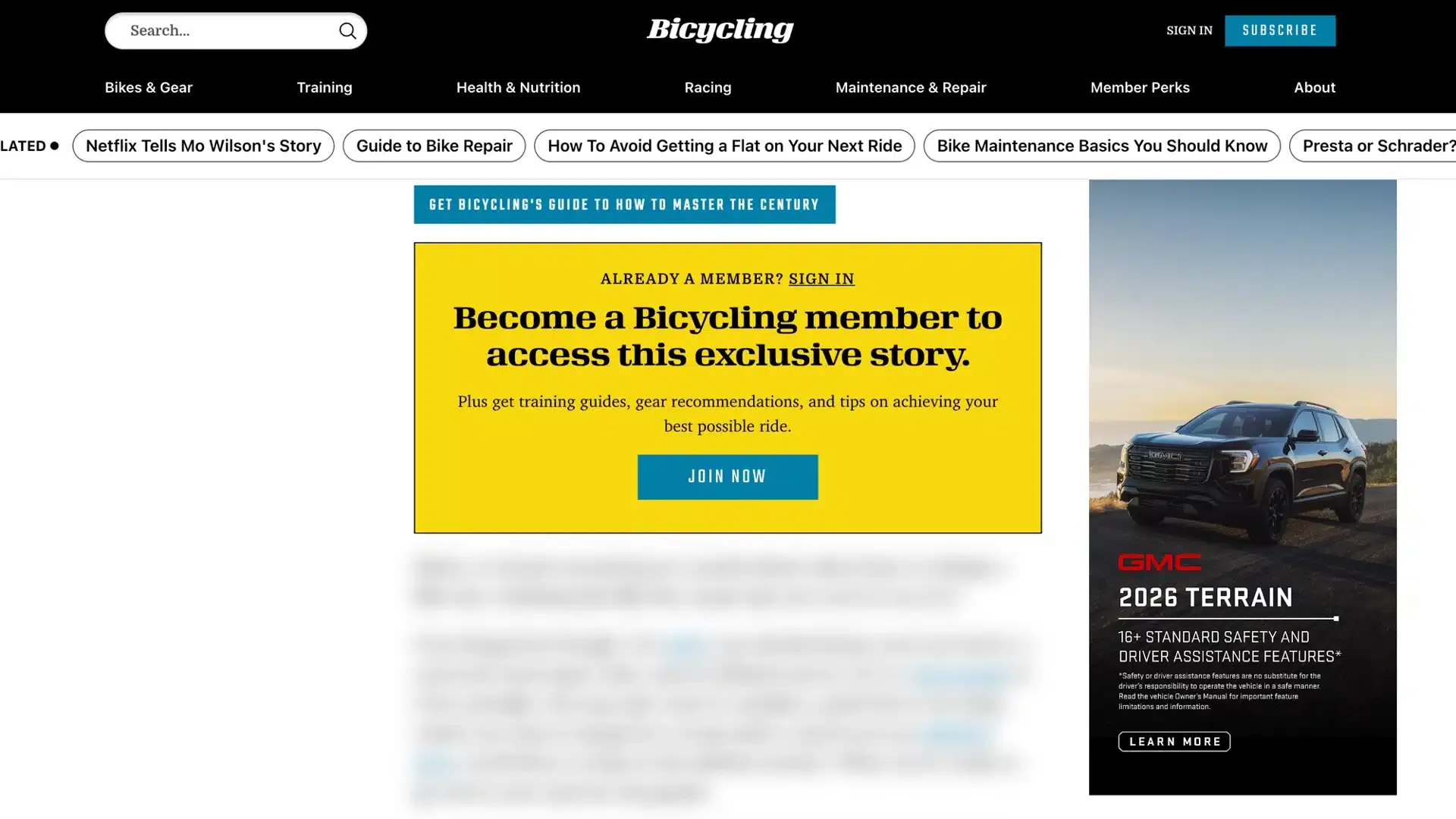
That is high friction: Asking me for something—information or money, usually—before you’ve earned my trust.
There are other kinds of friction, like dismissible popups. But gating is the absolute worst, and I’ve never, in 30 years, seen gating generate quality leads or long-term customers. Don’t do it.
Don’t do it to me, at least, or you’ll end up in my next article.
Provide a CTA
Frictionless doesn’t mean you can’t do a little selling. We’re marketers. We’re here to shape demand for our products and services, and all this work has to lead to revenue.
Provide a CTA after or during your teaching. GSE does it right. They have links throughout their solution, but they never obstruct:
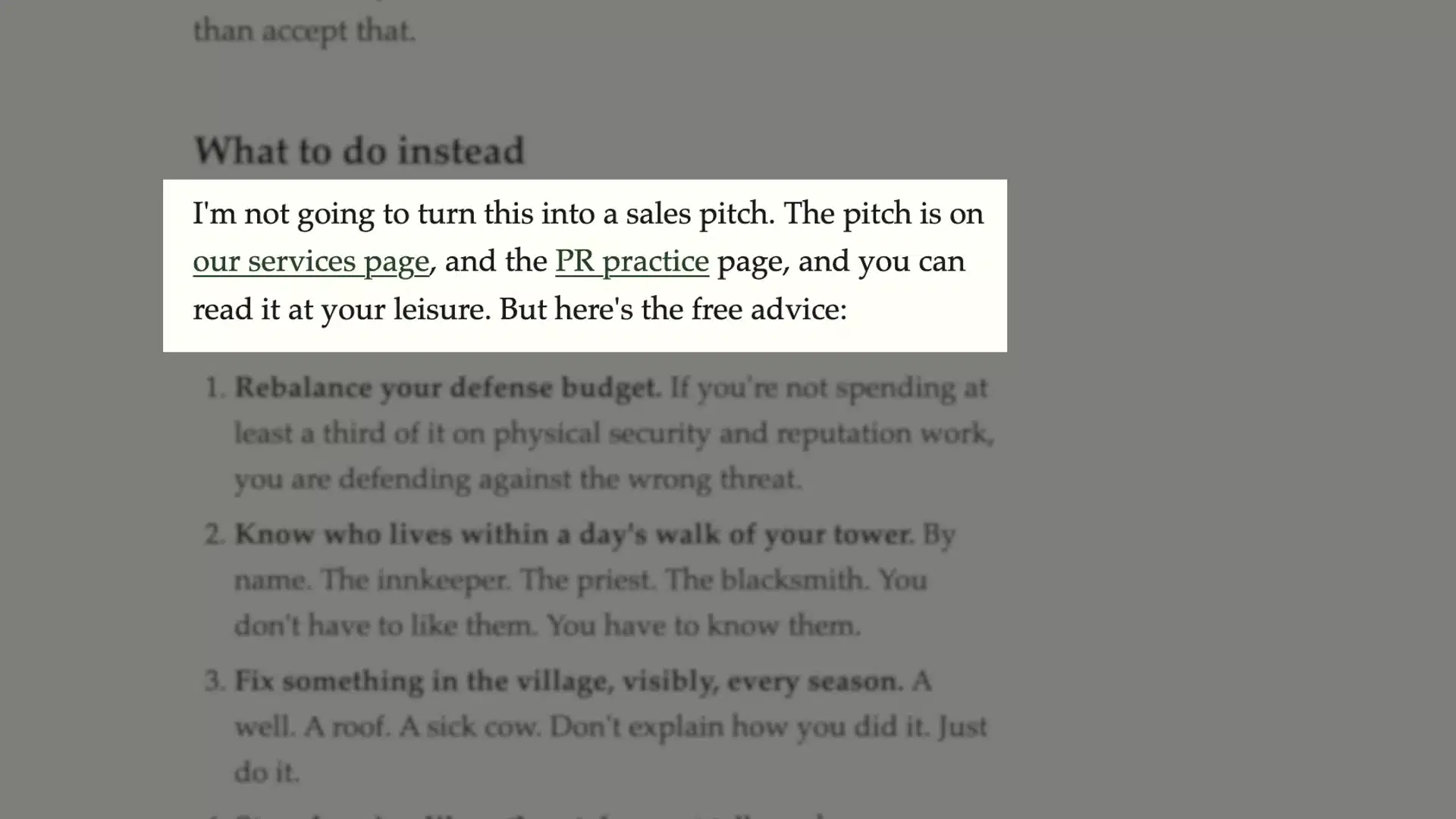
That’s zero friction. I can take GSE’s teaching and try to do it myself, or I can click the link, go to the services page, and get in touch.
REI does it well, too. They have a page explaining how to fix a flat bicycle tire. Instead of gating it like you-know-who, they sprinkle handy little “shop now” links throughout the guide.
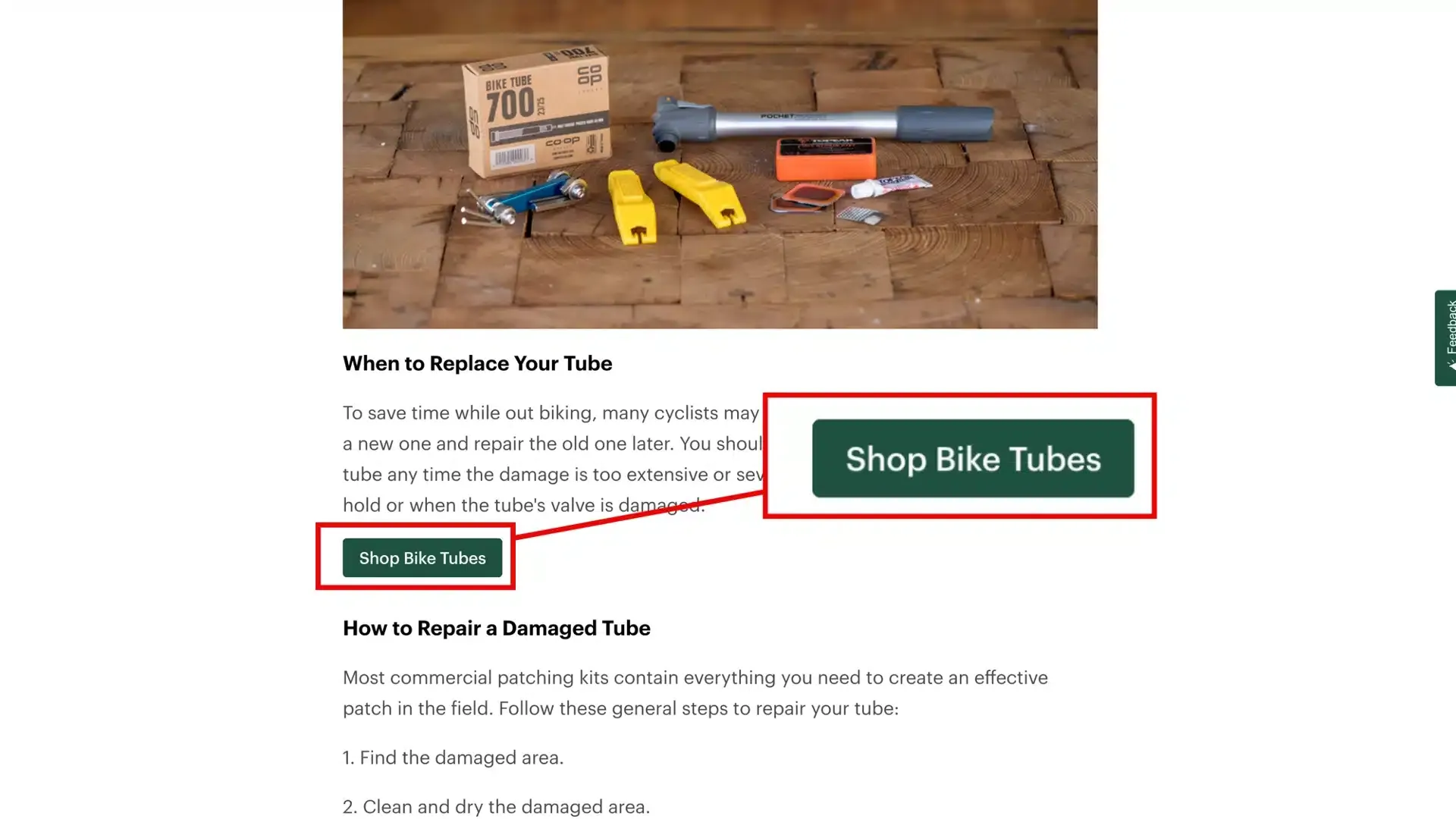
Again, zero friction. REI earns my trust first, then politely points out that I can buy from them.
Teach small, miss small
Don’t start with big, high-budget stuff. The four-week video training is cool, but it’s expensive, and if it fails, you’ll end up fired or, even worse, sentenced to writing 352-word blog posts with 2.4% keyword density for the rest of your life.
Do small stuff. A templated Instagram post can go a long way:

So can sneaking a little teaching right into your marketing content. GSE very cleverly brings up the villager problem on their PR services page:
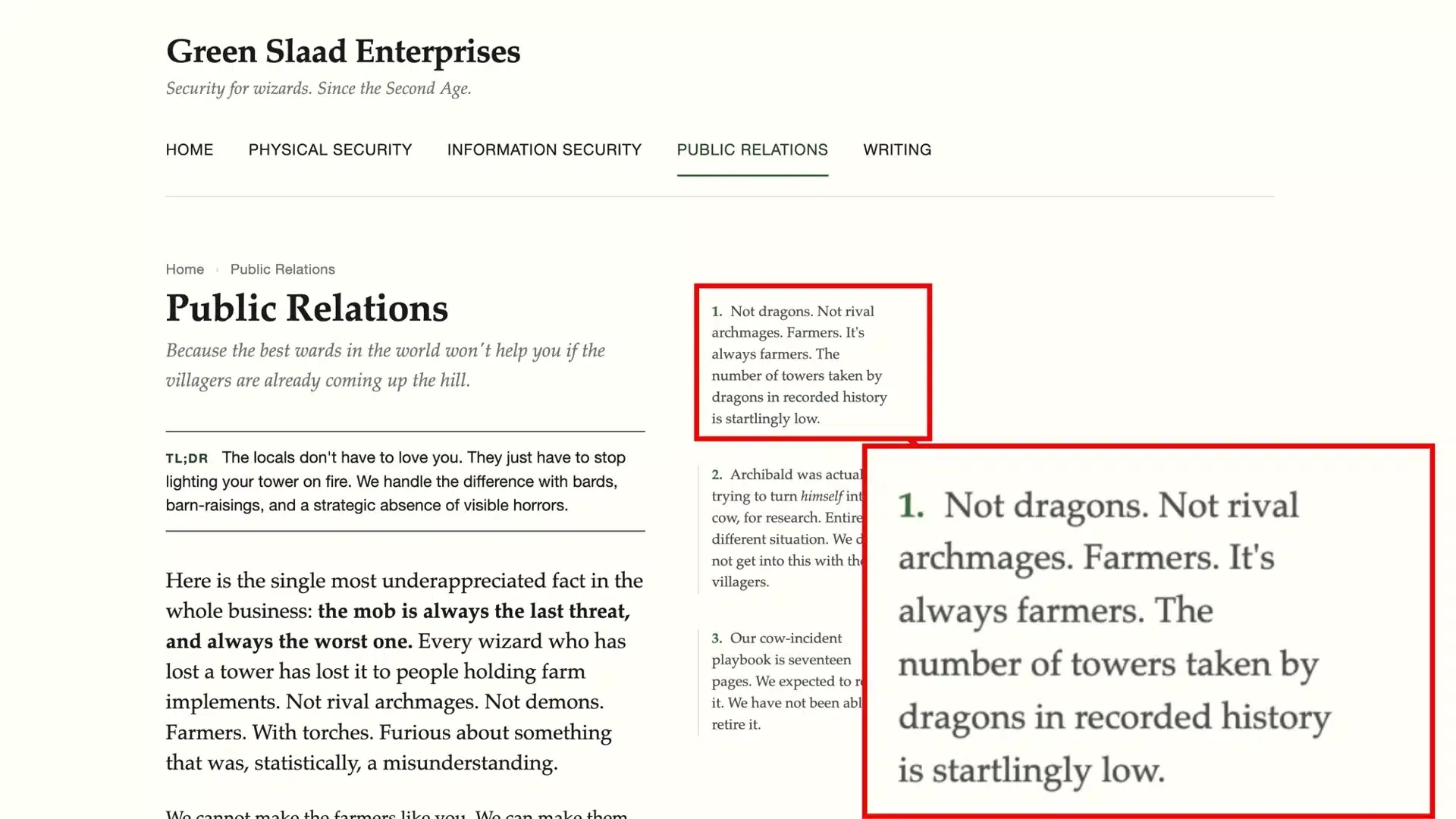
The tricks to teaching small are consistency and analytics. Keep producing stuff. Keep reviewing performance. If something works, double down: Repost it elsewhere. Create something bigger.
The upside of teaching small is that, if it doesn’t work, you’ve only spent a little time. And it’s bound to pay off in some small way: Slightly higher engagement, better bounce rates, a couple more followers. I’ve never seen anyone get fired for teaching small. I have seen some big wins come out of it.
Speaking of big, don’t be afraid of teaching big, either. Just be smart about it.
Teach big to win big
You should still try to teach big. After a few times you teach small, try teaching big. Go ask for a budget and create something like GSE’s ten-part course, Crisis PR For Wizards.
Use your teach small work as a test bed for bigger ideas. If something small worked, that’s the first place to consider doing something larger.
Three hard lessons I’ve learned about teaching big:
- When you teach big, promote the heck out of it: Announce them as proudly as you do a new product or service. GSE posts little snippets of their course to social media, sends reminders to their clients via email, and even did a free webinar that provides an overview of the course.
- Keep it up to date. Don’t just leave the big stuff to rot, and don’t just remove it a year later because it’s “stale.” Update it! You invested a lot of time and budget in this content.
- Set expectations. Teaching big doesn’t happen overnight. It can take weeks or months for a new initiative to start paying off.
Teach small a lot. Teach big when you can. That’s your best combo.
Now What?
Good question! You now have a complete recipe for teaching the shit out of everything:
- The toolset
- The process
- The tactics
Feel free to throw it all away. Just remember the rules:
- Algorithms (and humans) reward trust
- Teaching builds trust
- Algorithms (and humans) reward teaching
So teach the shit out of everything.
How you go about it is up to you.
Got questions? Reach out to me! Seriously, I love to help out:
- LinkedIn: /in/ianlurie
- Threads: @ianluriednd (warning, political views abound)
Or, leave a comment below: